
Concrete and heavy
Concrete and Heavy Debris Removal in Lakeland
Broken slab, walk, apron, block, pavers, terrazzo and roof tile. Dense material is a weight problem rather than a volume problem, so it goes in a small container loaded flat, and it is billed by the ton at the county landfill in Winter Haven.
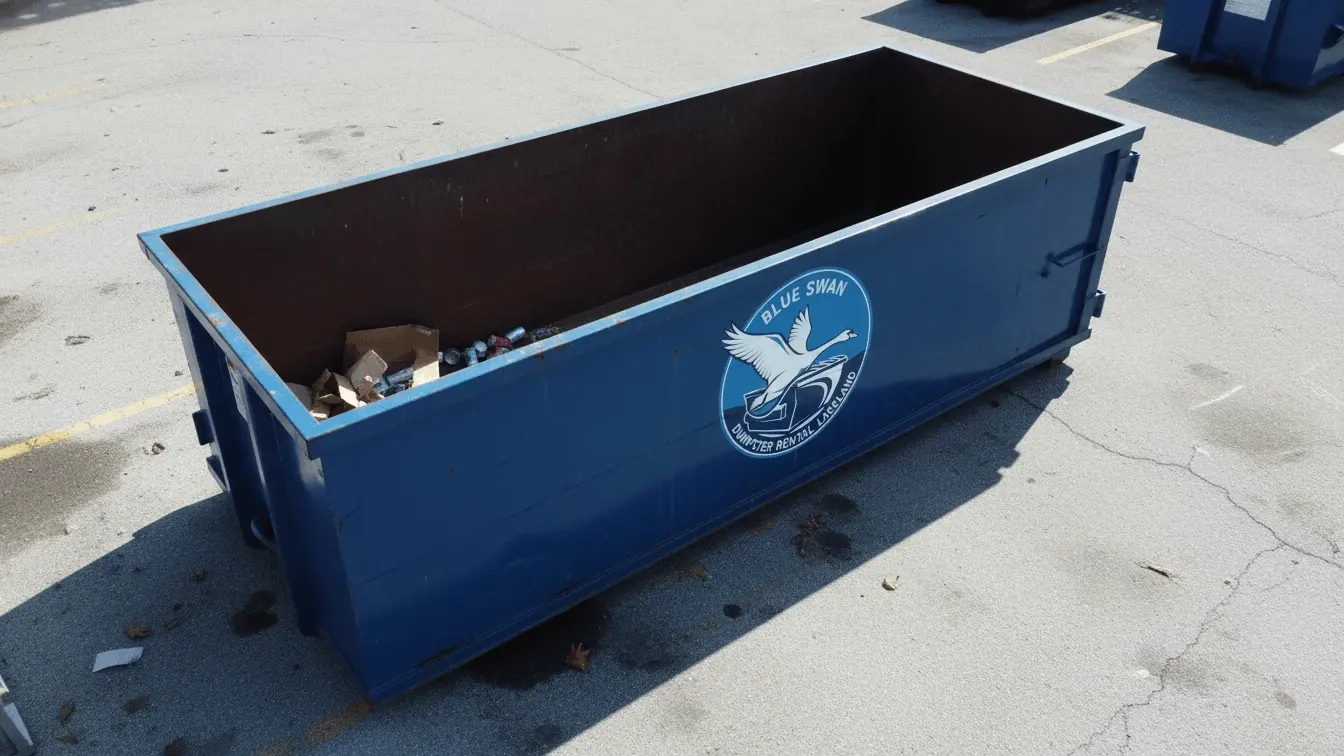
Heavy debris is the one category where a smaller container is the right answer, and it takes some explaining because it looks wrong. Broken concrete, block, mortar, pavers, base sand, terrazzo and concrete or clay roof tile are several times denser than the mixed household debris people picture when they imagine a roll-off. A container filled with rubble reaches its lawful payload while the sides are still plainly visible. That is not the box being too small; that is the box working correctly. Put the same rubble in a 30 and you get a container that cannot lawfully leave your property, which costs everybody a morning and solves nothing. So the rule on this material is simple and we say it on every call: load flat, load low across the whole floor, stop at the marked fill line even when it feels early, and cut any rebar or mesh back below the rim before we lift.
Disposal is billed by weight, and in Polk County the rate is public, which is unusual and useful. The North Central Landfill at 7425 De Castro Road in Winter Haven charges $46.00 a ton for construction and demolition debris as published, effective October 2025 under a Board resolution that also provides for an annual increase of five percent for each of the next five years, with a $10.00 minimum load fee. Residential solid waste is the same $46.00 and yard trash is $36.50. There is no sorting penalty and no surcharge for combining materials in those published rates. Two conditions apply at the gate. The County states the site is to be used solely by commercial haulers carrying materials from within Polk County, so debris origin is a real question here. And bulk liquids, pressurized tanks, explosives and asbestos are refused outright.
Polk is a good place to be careful about what goes into the ground, and the county knows it. This is the historic heart of Florida phosphate mining — the Bone Valley region, where commercial extraction began in 1888 and where more than 180,000 acres have been mined and reclaimed. In August 2016 a sinkhole opened beneath a phosphogypsum stack at the Mosaic New Wales facility in Polk County; Florida DEP staff were on site less than 24 hours after being notified, and a Consent Order with corrective action and monitoring ran through 2018. That history is why people here ask harder questions about disposal than they do in most markets, and it is why we would rather turn a load down than guess. Concrete, block and clean rubble are ordinary material. Anything mixed with fuel, solvent, chemical or unknown residue is not, and it needs a different route.
The ground itself is worth understanding before a heavy container is placed. All of Florida is underlain by carbonate rock, and Polk is a genuine karst county: the Florida Geological Survey describes sinkholes forming where slightly acidic groundwater dissolves cavities in the limestone, through cover-collapse where impermeable sediments sit over voids, and through slower cover-subsidence under thick permeable sediments. Florida law recognizes the distinction too, separating sinkhole loss from catastrophic ground cover collapse in § 627.706, Fla. Stat. None of that tells you anything about a particular lot, and we are not going to pretend otherwise — we are a dumpster company, not an engineer. What it does mean practically is that a very heavy point load belongs on sound concrete or compacted base, not parked on soft ground, and that if you have an existing depression or settlement question on your property, that is a conversation for an engineer first.
The surface question is not theoretical in this county. Polk sits high and sandy: Lakeland is at 203 feet, the Lake Wales Ridge runs across the east of the county, and the county high point is 305 feet at Crooked Lake Sandhill. Ridge sands are deep, loose and well drained, and they will not carry a loaded rubble container on an unpaved driveway or a grass verge, particularly between June and September when more than half the year’s rain falls. So heavy loads go on concrete or compacted base, with plywood under the wheels and doubled under the rails, and we photograph the approach when we arrive. Rain matters here for a second reason: masonry, base sand and demolition fines absorb water, and a rained-on rubble load gains real weight overnight. Tarp it. At $46.00 a ton as published, water is the most expensive thing you can accidentally put in the box.
Heavy Material We Take
Driveway, Apron And Walk Breakout
Broken slab, apron sections and the base sand under them. The commonest heavy job in Lakeland, and it wants a 10 loaded flat across the whole floor rather than heaped at the tailgate end.
Patio And Pool Deck Removal
Slab, coping, deck tile and the mortar bed under it. Dense, awkward pieces, and easier on everyone if they are broken to a size two people can place rather than one person can drop.
Block, Mortar And Masonry Walls
Concrete block from a wall, planter or outbuilding, plus the mortar and footing. Cut reinforcing back below the rim before the truck comes so the lift is clean.
Pavers And Edging
Paver patios and walks, edging, and the compacted base sand that comes up with them. Heavier than they look because the base is most of the weight rather than the pavers themselves.
Terrazzo And Mortar-Bed Tile
Terrazzo floors and tile set in a mortar bed out of older Lakeland houses. The mortar is the weight and it is always more than people expect when a bathroom floor comes up.
Concrete And Clay Roof Tile
Tile tear-off from a Mediterranean Revival or Spanish Mission roof. Several times heavier per square than shingle and it does not compress, so it gets its own small container.
Footings, Steps And Pads
Poured steps, carport footings, condenser pads and post bases. Small in volume and serious in weight, and usually the last thing to come out of a demolition.
Excavated Soil And Fill
Spoil from a footing, a pool or a trench. Tell us at booking how much is soil and how much is masonry, because the two are handled differently and mixing them limits where a load can go.
Which Size For Heavy Material
For dense material the answer is nearly always the 10 yard, and occasionally the 15. A 10 is roughly twelve feet long with low sides, which means rubble goes in over the rim rather than up a ladder, and it will sit on a single-width Lakeland driveway with room to park beside it. It reaches a lawful payload with the sides still visible, and that is the point of it. A 15 makes sense when the job mixes moderate weight with real bulk — a patio slab coming out along with the timber and screen frame around it, for example. Above that, heavy material stops being a size decision and becomes a swap decision: two pulls of a small box beat one box that cannot legally move. Never mix rubble into a large container of light debris hoping to even it out, because the weight limit does not average. Dimensions are on the container sizes page, and the sizing guide works through examples.
10 Yard Dumpster
Concrete, block, roof tile and wet debris — the box that reaches payload before it looks full.
View this size →15yd³15 Yard Dumpster
A single room, a small tear-off, or a garage and carport cleared to the walls.
View this size →Loading, Surfaces And Tarps
Loading technique matters more with heavy debris than with anything else we haul. Spread the material across the whole floor of the container rather than heaping it at the door end, keep the pieces to a size two people can place, cut rebar and mesh back below the rim, and stop at the marked fill line even when the box looks half empty. That is what keeps the load legal, keeps the lift straight and keeps the container from marking your driveway. Underneath, plywood goes under the wheels and doubled under the rails on every heavy set, on concrete or compacted base rather than grass or sand — Polk is high, loose ridge country and Lakeland sits at 203 feet, so a several-ton point load on soft ground will sink and rut. We photograph the approach on arrival and we want about 60 feet of straight run, ten and a half feet of width and 20 feet or more of vertical clearance. Keep the box tarped between sessions: masonry, base sand and fines absorb water, and at $46.00 a ton as published, rain weight is money. Keep slurry and dust out of the storm drains too, because the City’s lakes are interconnected and what happens upstream shows up downstream.
Not sure this is the right service? Describe the job on the phone and we will point you at the right container even if it is a different service page. Call (863) 267-9087.
Get a flat quote
Two minutes on the phone gets you a size, a price and a delivery slot. No forms.
(863) 267-9087Recommended sizes
How it works
Concrete & Heavy Debris in four steps
- 1
Call us
Tell us the project, your address and when you want it. Two minutes on the phone and you have a flat price.
- 2
We deliver
Our driver walks the drop, lays protection boards and sets the container exactly where you want it.
- 3
You load it
Take your time within your rental window. Keep it level with the top rail and we handle the rest.
- 4
We haul it
Call or text when you are done. We pull it, sort what can be recovered and dispose of the rest properly.
Concrete & Heavy Debris FAQs
Why is a small container right for a big pile of concrete?
Because the limit is weight, not volume. Broken concrete, block, mortar, pavers, terrazzo and roof tile are several times denser than mixed household debris, so a container hits its lawful payload long before the sides fill. A 10 yard loaded flat and low goes out at a legal weight; the same rubble in a 30 gives you a box that cannot lawfully move. Load in pieces two people can place rather than pieces one person can drop, spread the material across the whole floor rather than heaping it at the tailgate, cut rebar and mesh back below the rim, and stop at the marked fill line even when it feels early.
What does it cost to dispose of concrete here?
It is priced by the ton and the rate is public. Polk County’s North Central Landfill at 7425 De Castro Road, Winter Haven publishes $46.00 a ton for construction and demolition debris, effective October 2025, with a $10.00 minimum load fee, under a resolution that also provides for a five percent annual increase for each of the next five years. Residential solid waste is also $46.00 a ton and yard trash is $36.50. Polk buries this material; there is no incinerator in the system and no sorting surcharge in the published rates. Always treat those figures as published-and-dated rather than as today’s number.
Can I put soil or fill in with the concrete?
Tell us before you book rather than after. Excavated soil, sand and fill are a separate conversation from masonry rubble, and mixing them limits where a load can go, so we want to know roughly what the split is before the container leaves the yard. Digging in Polk has its own habits: this is high, sandy ridge country over carbonate rock, and spoil weighs considerably more wet than dry. Before you break ground, file a locate request with Sunshine 811 — not less than two full business days under § 556.105(1)(a), Fla. Stat., and inside the city also a written 48-hour condition of the right-of-way permit.
Does Polk County’s ground affect where the container sits?
Practically, yes, though not in the way people sometimes ask. All of Florida is underlain by carbonate rock and Polk is genuine karst country, but nothing about that lets anyone say anything useful about a specific lot, and we will not pretend otherwise. What we do know is the surface. Polk sits high on deep, loose ridge sands, with Lakeland at 203 feet and the county high point at 305 feet, and those sands will not carry a loaded rubble container in the wet season. Concrete or compacted base, plywood under the wheels and doubled under the rails, every time. If you have a settlement concern, ask an engineer first.
Can heavy debris be mixed with regular debris?
In small quantities, sometimes; as a plan, no. The weight limit does not average out, so a 30 yard box of light remodel debris with a patio slab thrown in at the bottom can still be over the line while it looks half empty, and then everything above the rubble has to come out again. The reliable approach on a job producing both is two containers: a 10 or a 15 for the masonry, loaded flat and low, and a 20 or a 30 for the airy material. It usually costs less than one overloaded pull and it never costs a morning. Call the yard on (863) 267-9087 and describe both piles.
More services
Other things we haul
Residential Dumpster Rental
Driveway placement for the garage, carport and lanai cleanouts a slab-built house produces.
Learn more →Commercial Dumpster Rental
Containers for businesses and contractors — neither the City nor the County collects C&D at the curb.
Learn more →Construction Dumpster Rental
Mixed C&D in one roll-off, with next-day swap-outs across Polk County.
Learn more →Roofing Dumpster Rental
Weight-rated cans sized by squares and layers, tarped against the afternoon rain.
Learn more →Roll-Off Dumpster Rental
10, 15, 20, 30 and 40 yard roll-offs across Lakeland and Polk County.
Learn more →Same-Day Dumpster Rental
Call before the cut-off and we can usually get a container to you this afternoon.
Learn more →Junk Removal Dumpsters
Clear a garage, carport, lanai or spare room on your own schedule.
Learn more →Estate Cleanout Dumpsters
Discreet, patient container service for families clearing a lifelong home.
Learn more →Demolition Debris Removal
Containers and fast swaps for lanais, carports, sheds, garages and interior gut-outs.
Learn more →Yard Waste & Brush Removal
Clean separate loads for oak limbs and palm fronds — burning yard debris is prohibited in the city.
Learn more →Where we deliver
Concrete & Heavy Debris across Polk County and Central Florida
Same service, same flat rates, every town below. Pick yours for local placement and permit notes.
Talk to a real person
Need concrete & heavy debris in Lakeland?
Tell us what you are clearing out and we will tell you the right size and the flat price to put it in your driveway. No forms, no waiting on an email — just call and we will sort it out in a couple of minutes.
Serving Lakeland, Polk County and Central Florida · Mon–Fri 6:30am–5pm, Sat 7am–1pm