
Remodeling
Historic District Renovation Debris in Lakeland, Florida
Lakeland has seven local historic districts across 1.42 square miles. In a core where every period of significance ends before 1978, the EPA lead rule is the default condition of the job.
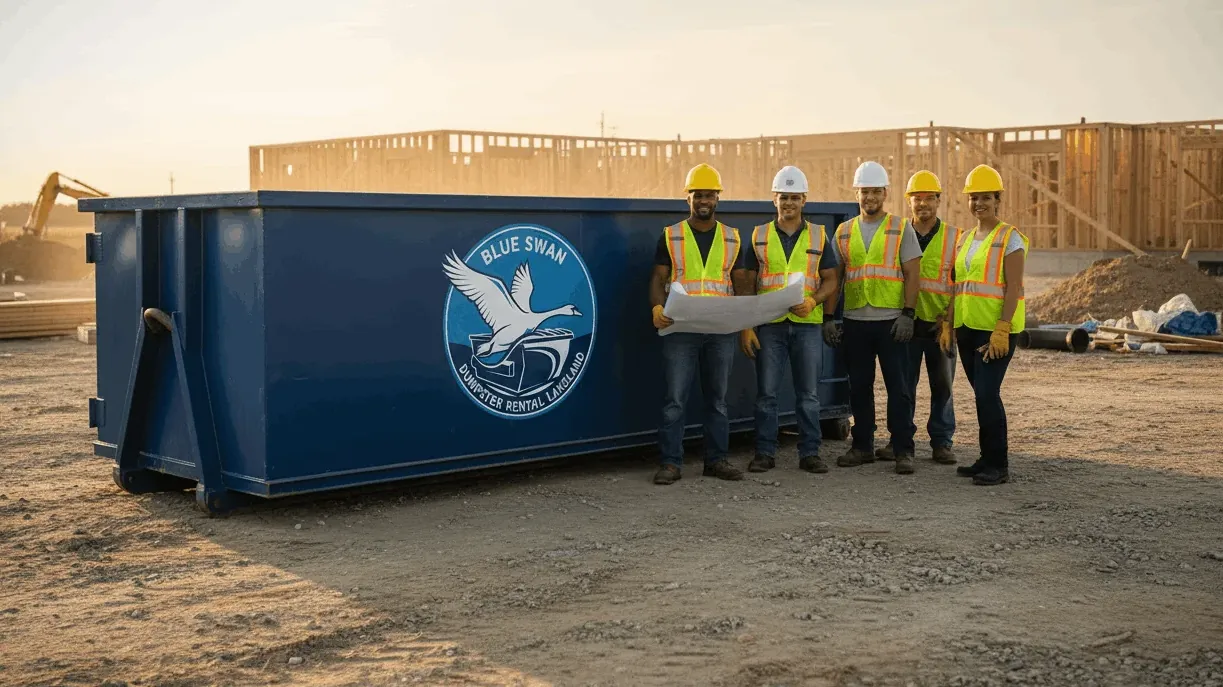
Lakeland is old by Florida standards. The city was incorporated on 1 January 1885, and a great deal of what went up in the first fifty years after that is still standing, still lived in, and still being remodeled. Seven local historic districts cover 1.42 square miles inside the city, taking in more than 1,600 historic buildings. Their periods of significance run from 1884 to 1953.
That changes the debris. A 1924 bungalow near Lake Hunter does not come apart the way a 2015 house in a new subdivision does. The materials are different, the weight is different, the street is narrower, and the federal lead rule is sitting on the job from the first swing of a hammer. We have been running boxes out of our yard on Combee Road since 2014, and historic core work is a category of its own here.
Here is what to expect, and how to plan the container around it.
Seven districts, and what they cover
The City protects seven local historic districts. They are not a vague notion of an old neighborhood. They are mapped, and each one carries a documented period of significance.
| District | Period of significance | Typical stock |
|---|---|---|
| Munn Park | 1884 to 1946 | Downtown commercial, Classical and Colonial Revival, Art Deco, masonry vernacular |
| South Lake Morton | 1900 to 1942 | Craftsman bungalow, frame vernacular, Mediterranean Revival |
| East Lake Morton | 1900 to 1942 | Craftsman bungalow, Classical Revival, Tudor Revival |
| Dixieland | 1905 to 1940 | Craftsman bungalow, Colonial Revival, Spanish Mission, frame vernacular |
| Beacon Hill | 1923 to 1945 | Frame and masonry vernacular, Tudor, Dutch Colonial Revival, Queen Anne |
| Biltmore-Cumberland | 1922 to 1953 | Masonry vernacular, Colonial Revival, bungalow, Mediterranean Revival |
| Lake Hunter Terrace | 1924 to 1951 | Wood frame and masonry vernacular, Classical Revival, bungalow |
Three of those periods start before 1910. That is the number that matters for planning a renovation. It is not a museum district with a handful of landmarks in it. It is a working residential core where most of the houses predate the Second World War.
Around that core, the county is booming. Polk County grew 20.7 percent between 2020 and 2025, and county officials describe an average of one family per hour relocating here. So we run two completely different jobs in the same week: a gut of a 1930s house on a brick street, and a builder cleanup on a slab that was poured in March. Same truck, same size box, entirely different debris.
What actually comes out of a 1920s Lakeland house
The volume surprises people less than the weight does.
The kitchen
Old kitchens have been remodeled two or three times already. You pull one layer and find another underneath. Expect site-built cabinets made of solid stock rather than particle board, layered flooring where sheet vinyl went over tile that went over the original pine, and a masonry wall behind the range that has to be chipped out by hand. Solid wood cabinet runs load heavy and stack badly. Budget more room than the square footage suggests.
Bathrooms and tile
A 1920s or 1930s Lakeland bathroom usually gives up a cast iron tub, a wall-hung sink, and a mud-set tile floor on a wire lath bed. The mortar bed is the heavy part. A single small bathroom floor demoed down to the deck can run several hundred pounds of mortar alone. Cast iron tubs are best cut in the room and carried out in pieces, and they should go in low and flat, not tipped on end where they can shift.
Windows
Original wood sash windows are the single most common historic-core project we deliver for. They are also the single most regulated. See the next section before you touch one.
The roof and the porch
Deep porches, exposed rafter tails and low-slope porch roofs are standard on the bungalows. Tear-offs on these houses often turn up more than one layer, and porch framing that has taken eighty Florida summers is frequently punkier than it looked from the ground. Roofing is a weight job rather than a volume job, and we cover the sizing math separately in our roofing tear-off size guide.
Pre-1978 is the default condition of the job
The EPA Renovation, Repair and Painting rule applies to housing, child care facilities and preschools built before 1978. In Florida it is administered directly by the EPA. In Lakeland's historic districts, every period of significance ends before 1978, which means the rule is not an edge case here. It is the default condition of the work.
What that means in practice is containment, dust control, specified work practices and cleanup verification, performed by a firm that holds EPA certification with certified renovators on the crew.
Who the rule covers
Firms doing renovation, repair or painting that disturbs lead-based paint in pre-1978 target housing must be EPA certified. Homeowners doing work on their own home are generally outside the rule, but that exemption is narrower than most people assume. It does not cover you if you rent the property out, if you operate a child care center in it, or if you are buying and renovating houses for profit. A lot of historic-core work in Lakeland falls into one of those three categories.
Windows and demolition, always
Window replacement and demolition are covered work. There is no version of pulling original sash out of a 1925 house that avoids disturbing the paint, and there is no version of taking a wall down that does either. If a contractor tells you a pre-1978 window swap in South Lake Morton does not trigger the rule, get a second opinion. You can read the program requirements at the US EPA.
For the container, the practical consequence is sequencing. Debris comes out under the crew's containment plan, not tossed off a porch into an open box in the front yard. Plan for a covered container and short, controlled carry paths.
Call the City before you alter a contributing structure
Here is where we stop short of telling you what the rule is. Lakeland has historic preservation staff at the City, and the districts carry expectations about how alterations are handled that ordinary neighborhoods do not. We are a hauler, not your permit consultant, and we are not going to publish a claim about exactly what approval your specific project needs.
What we will tell you plainly is this: before you alter, add to, or take down anything that contributes to one of the seven districts, call the City and ask. Do it before you order materials, not after. The City of Lakeland publishes contact information for the department that handles it. One phone call at the start of a project costs nothing. Finding out at the wrong moment costs a schedule.
The same goes for the building permit itself. Roofs, driveways, carports, porches, retaining walls and structural work all carry their own permit path, and that is a separate desk from anything historic.
Getting a container onto a historic street
The districts were platted before anyone was planning for a roll-off truck. Streets are narrow, driveways are single width, and the mature oaks that make Dixieland and East Lake Morton worth living in also hang low over the road.
The driveway first
Whenever it can work, the box goes on the driveway. That keeps it off the right-of-way and out of the permit conversation entirely. Tell us the width and the surface when you call, and tell us if there is a low branch or an overhead line on the approach. We need roughly sixty feet of straight clearance behind the truck to set a 20 yard box down cleanly, and vertical clearance above it, because the container rises as it comes off the rails. Our guide to protecting a driveway during delivery covers the boards we put down and why.
The street is right-of-way
If the container has to sit in the street, that is a different animal in Lakeland. The City states that any work within the City right-of-way, of any nature, requires a Right-of-Way Use Permit through the Public Works Engineering Division before work begins. The permit provisions name dumpsters and solid waste roll-off containers explicitly, and the City reserves the authority to require removal from on-street parking on 24 hours notice, at the permittee's expense. Fees run in published tiers of no fee, $250 and $500.
Most cities have nothing that specific about containers. Lakeland does. We walk through the tiers and the contacts in our article on dumpster permits in Lakeland.
What cannot ride in the container
Some of this is statewide. Some of it is a Polk County gate rule. All of it will get a load turned away.
- Asbestos. The North Central Landfill does not accept it, and in Polk County the notification goes to the Florida DEP Southwest District office rather than a county air program. Ten working days, $200 on paper or $100 filed and paid electronically, as published. Older Lakeland houses can carry it in pipe wrap, floor tile, mastic, siding and roofing.
- Liquid paint. Dried out cans are one thing. Wet paint is household hazardous waste and belongs at the County facility in Winter Haven.
- Tires, pressurized tanks, bulk liquids and explosives. None of them go in the box.
- Batteries, used oil, antifreeze, pesticides and fluorescent tubes. Same answer. These come out of historic-core garages constantly.
- Appliances with refrigerant. Tell us in advance so we can route them properly.
Debris origin matters here too. The County landfill is to be used solely by commercial haulers carrying materials from within Polk County. A Lakeland container is for Lakeland and Polk County debris.
Sizing a historic-core remodel
The 20 yard is the Lakeland default and it is usually right here as well, but the older stock pushes some jobs in both directions.
- 10 yard. One bathroom demo down to the studs, a mud-set tile floor, a chimney takedown, or a small masonry job. Order this when the debris is dense, not when the job is small.
- 15 yard. A single room, a kitchen strip-out where the cabinets are going, a window package for a whole house, or a porch rebuild.
- 20 yard. A kitchen and a bathroom together, a whole-house window and trim project, or a garage and attic cleared out ahead of a remodel.
- 30 yard. A full interior gut. Check the street first. On some of the narrower historic blocks a 30 is a genuinely tight set, and two pulls on a 20 is the smarter play.
Weight decides more of these jobs than volume does. Tile, mortar bed, cast iron and masonry all hit the axle limit long before they fill the box. If your job is mostly of that character, say so on the phone and we will size down and plan for a swap. The full breakdown is on our dumpster sizes page.
How we run a historic district job
Boards under the wheels and under the rails, every time, on any driveway that is not new concrete. A tarp on the container, because from June through September an open box in Lakeland fills with rainwater and water is weight you pay to haul at the scale.
We ask about the street before we load the truck. We ask whether the crew is working under a lead containment plan, because that changes where the box sits and how the debris gets to it. And we ask what era the house is, because the answer tells us more about the tonnage than the square footage does.
Call Blue Swan Dumpster Rental at (863) 267-9087. Tell us the district, the age of the house, what you are taking out and where the truck can back in. We will tell you the size, the price and whether you need to make a call to the City first.
Questions this guide did not answer? Call (863) 267-9087. We would rather spend two minutes on the phone than have you order the wrong container.