
Storm
Storm Debris Cleanup in Lakeland: An Inland Playbook
Nobody in Polk County evacuates for surge. Lakeland is at 203 feet. What arrives here is the storm after landfall, and the cleanup is wind, water and a quarter million cubic yards of debris.
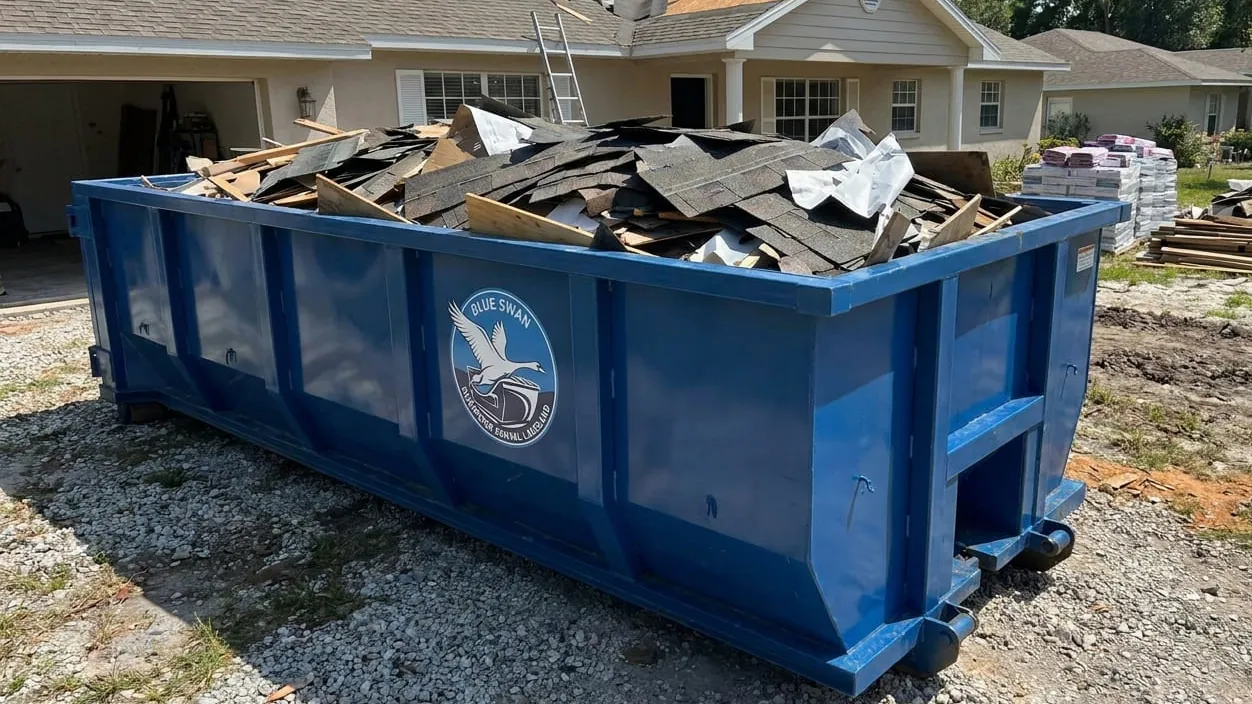
Nobody in Polk County is evacuating for storm surge. There is no coastline here. Lakeland sits at 203 feet above sea level and the county high point is about 305 feet. Surge is physically inapplicable to this city, and any storm guidance you read that leads with evacuation zones and tide gauges was written for somewhere else.
What Polk County gets is the storm after it has come ashore. Wind that has crossed forty miles of peninsula and is still strong enough to take down century oaks. Rain measured in feet rather than inches. And, afterward, a debris problem measured in hundreds of thousands of cubic yards.
That is a different cleanup than a coastal one, and it calls for a different plan.
Polk County is where storms cross the peninsula
A hurricane that makes landfall on one Florida coast and exits on the other has to go over the middle. Polk County is the middle. That is how a county with no shoreline has taken repeated direct hits.
The institutional memory here runs to 2004, when three hurricanes — Charley, Frances and Jeanne — struck the county in a single season. Polk County government produced a documentary on the twentieth anniversary, partly because so many residents were not here for it. County officials have described the pace of newcomers as roughly one family per hour relocating to Polk County, and Census figures show the county grew about 20.7 percent between 2020 and 2025. A large share of the people who will clean up after the next storm have never cleaned up after one here.
Irma, 2017
Hurricane Irma’s eye passed directly over the western portion of Polk County in the early hours of 11 September 2017, still at Category 2 strength that far inland. Afterward, eight of every ten homes in the county were without power.
The damage was trees. Fallen oaks through roofs, across driveways, into fences and screen enclosures. Inland, a hurricane is a wind-and-tree event, and the debris is wood.
Milton, 2024
Milton was the rain storm. Lakeland took more than 12 inches in 24 hours against an October normal of about 2.28 inches for the entire month. The National Weather Service classified the rainfall as a 1-in-1,000-year event.
Roads went under. Nineteen shelters opened across the county. And the City estimated between 200,000 and 250,000 cubic yards of tree and vegetative debris needing removal. To put that in terms a roll-off company understands: 250,000 cubic yards is more than eight thousand thirty-yard container loads. That is arithmetic, not an official figure, but it is the right order of magnitude for how long a recovery like that takes.
Sort it into three piles
After Milton, the City of Lakeland required residents to separate storm debris into three categories, and it is the single most useful piece of practical guidance to come out of that event.
- Construction debris — fence sections, roofing, drywall, damaged building materials, screen enclosure frames.
- Vegetation debris — limbs, trunks, brush, palm fronds.
- Appliances — refrigerators, washers, water heaters and other white goods.
The City also required piles to be kept away from trees, poles, structures, fire hydrants, meters and roadways. Collection ran street by street, with contractors and city crews working through the grid.
Two reasons this matters to you. First, a mixed pile slows a whole street down, because the grapple truck collecting vegetation cannot take your fence panels. Second, the sorting is the same discipline a container job needs. If you are renting a box during recovery, the vegetation and the construction debris are different materials at the scale — as published, yard trash is $36.50 a ton at the North Central Landfill against $46.00 for construction and demolition debris.
Where curbside stops and a container starts
Storm debris programs are generous and slow. That combination is what sends people to a roll-off.
Inside the city limits the City runs collection, and after a declared event it mobilizes debris collection at scale, street by street. In unincorporated Polk, county contractors do the same. Both work through a grid on a schedule that nobody living on it can influence.
What neither program does, in normal times or storm times:
- Neither the City nor Polk County collects construction and demolition debris at the curb. That is a standing rule, not a storm rule.
- Polk County does not collect whole trees, stumps, root systems or land-clearing material.
- Neither takes tires, hazardous materials or biomedical waste.
So if the storm took a fence, a shed, a screen enclosure and half a roof, the vegetative half of that pile has a curbside path and the rest does not. A container handles the rest, on your schedule instead of the grid’s. Our yard waste removal service covers the vegetation side.
Sizing a container for storm damage
Storm debris is bulky and awkward rather than dense, with one big exception. Limbs and brush do not compact, fence sections bridge across the box, and a screen enclosure frame takes up far more room than its weight suggests. That pushes most storm jobs toward volume.
| What the storm left | Usual container | Watch out for |
|---|---|---|
| Limbs, brush and palm fronds from a few trees | 20 yard | Cut to length or you lose half the box to air |
| Fence sections, shed, screen enclosure | 20 or 30 yard | Bridging. Break panels down flat. |
| Whole trunks and large limbs | 30 yard, cut short | Trunks are heavy and green wood is heavier |
| Water-damaged interior tear-out | 20 yard | Soaked drywall, carpet and pad are dense |
| Roof and structural damage with masonry | 10 or 15 yard | Weight, not volume, sets the limit |
The exception is water. Flood-damaged carpet, pad, drywall and insulation come out of a house at several times their dry weight, and disposal is billed by the ton at the scale. A container of soaked interior material fills its weight allowance well before it fills its rim. If your cleanup is a wet one, say so on the phone and expect a smaller box than the volume alone would suggest.
Green vegetation behaves the same way. A trunk that has been down for two days in Florida humidity weighs more than the same trunk seasoned. Cut it short, load it tight, and do not let it sit open through the next round of rain.
What cannot go in the container after a storm
Recovery is exactly when the wrong things end up in a box, because everything is wet, broken and in the yard at once. The exclusions do not relax.
- Household hazardous waste. Fuel cans, generator gas, pool chemicals, pesticides, paint, motor oil, antifreeze, batteries and fluorescent tubes go to the county facility at 5 Environmental Loop South in Winter Haven, open Friday and Saturday mornings, free to non-commercial residents.
- Tires. Handled separately, not as ordinary waste.
- Asbestos. The North Central Landfill does not accept it. If a damaged older building is coming down, that is a survey and a notice to Florida DEP Southwest District in Temple Terrace at (813) 470-5700, at least 10 working days out.
- Bulk liquids, pressurized tanks and explosives. Refused at the gate. Propane tanks included.
- Anything from outside Polk County. The landfill is for material from within the county, and out-of-county waste is not accepted.
Also: burning yard debris is prohibited inside the Lakeland city limits, and it does not become permitted because a hurricane put the pile there. Burn authorizations elsewhere moved to the Florida Forest Service district office at (863) 940-6701 in September 2016. Construction debris, treated lumber, plastics, rubber, tires, asbestos, roofing materials and tar cannot legally be burned anywhere in Florida.
The full material rules are in our guide to Polk County disposal and recycling rules.
Before the storm
A few things are worth doing while the forecast is still a forecast.
- Empty and pull any container already on site. A loaded open-top in a wind event is debris with a head start. If a box is on your job site and a storm is three days out, call for the pull.
- Do the trimming early. Deadwood and overhanging limbs come down anyway. Removing them in June with a container on the driveway is cheaper and safer than removing them off a roof in October.
- Clear the yard. Loose furniture, panels, sheeting and stacked material become projectiles.
- Know your address. Whether you are inside the city limits or in unincorporated Polk determines whose debris program you are in, which permit desk applies, and who to call. The cart on your curb answers it: gray or black with a yellow lid means you are a Polk County customer. Our service area pages lay out the rest.
Florida Division of Emergency Management publishes statewide preparedness guidance, and the National Weather Service forecast office at Ruskin (TBW) is the forecast authority for Polk County.
Placing a container during recovery
Recovery placement is harder than normal placement, and worth thinking about before the truck arrives.
Streets are narrow with debris piles on both sides. Power crews and contractor grapple trucks are working the same block. Driveways may be blocked by the same tree you are trying to remove.
If the container has to go in a City of Lakeland street rather than on private property, the City requires a Right-of-Way Use Permit through Public Works Engineering, and its provisions name dumpsters and roll-off containers explicitly. The City may require removal from an on-street parking space on 24 hours’ notice, at the permittee’s expense — and during a recovery, with crews needing the roadway, that authority is more likely to be used, not less. Plan for the driveway if there is any way to make it work.
There is one more Lakeland-specific consideration. The city has 38 named lakes and roughly twelve percent of its area is water, all connected through the stormwater system. As the City puts it, what happens upstream can have significant impacts downstream. After a heavy rain event the drains are already running hard. Keep debris piles and container placements clear of storm inlets, and do not let a container leak sediment into a drain that empties into Lake Parker, Lake Hunter or Lake Bonny.
Keep the pile off the hydrant and out of the roadway either way. That is the City’s own instruction and it is also just how a street stays passable for the crews.
Getting in line early
After a named storm, every roll-off company in Polk County is at capacity within a day. Containers are finite, the landfill runs to its posted hours, and the trucks are already committed.
The people who get boxes first are the ones who call first. If you know you have a fence, a shed, a screen enclosure or a roof coming apart, call before you have finished counting the damage. We will tell you honestly where you sit in the queue rather than promising a morning we cannot hit.
Blue Swan has been working out of our yard on Combee Road since 2014, through Irma and through Milton. Call (863) 267-9087.
Questions this guide did not answer? Call (863) 267-9087. We would rather spend two minutes on the phone than have you order the wrong container.